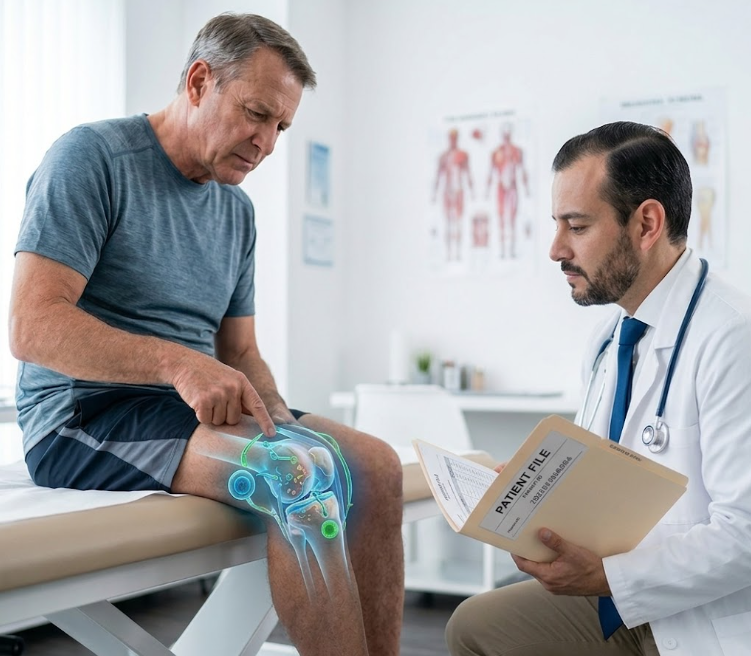
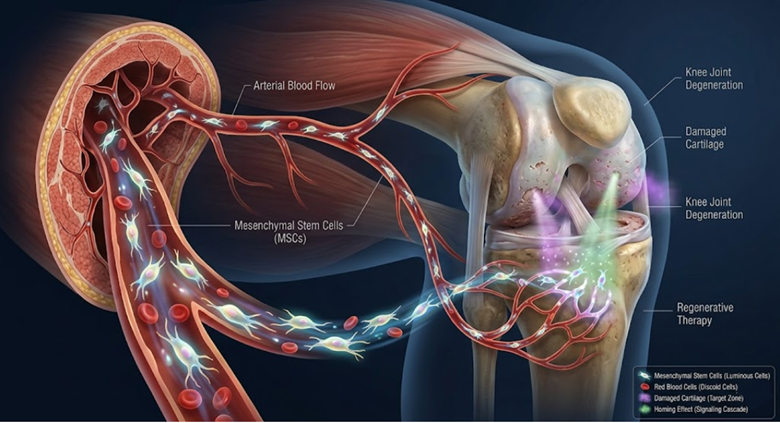
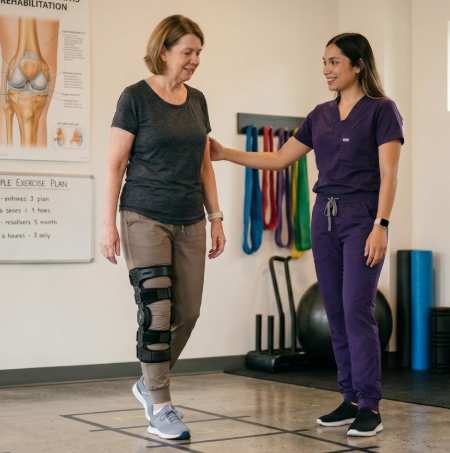
Dr. Guillermo Quezada performing knee condition evaluation for knee osteoarthritis Scientific visualization of mesenchymal stem cells targeting knee joint environment for knee osteoarthritis supportive therapy Patient walking with knee brace and physiotherapist guidance for knee osteoarthritis management

Regenerative Medicine Support for Knee Osteoarthritis

Supporting Knee Joint Health. Evidence-Informed MSC Therapy Integrated with Rehabilitation for Chronic Knee Conditions.

Non-surgical minimally invasive
Board-certified specialists
Personalized support plans
Patient receiving comprehensive knee evaluation for knee osteoarthritis showing areas of stem cell therapy dynamics
Femoral Condyle
The rounded end of the thigh bone. Mesenchymal stem cells (MSCs) support cartilage health in knee osteoarthritis by encouraging natural processes and helping to modulate joint inflammation.
Tibial Plateau
The flat top of the shin bone – MSC influences immune response in knee osteoarthritis
Meniscus
C-shaped cartilage cushion – MSC supports the recovery process of degenerative meniscal changes in knee osteoarthritis
Patellofemoral Joint
Kneecap articulation – MSCs for kneecap cartilage support in knee osteoarthritis

Understanding Knee Osteoarthritis

Evidence-Based
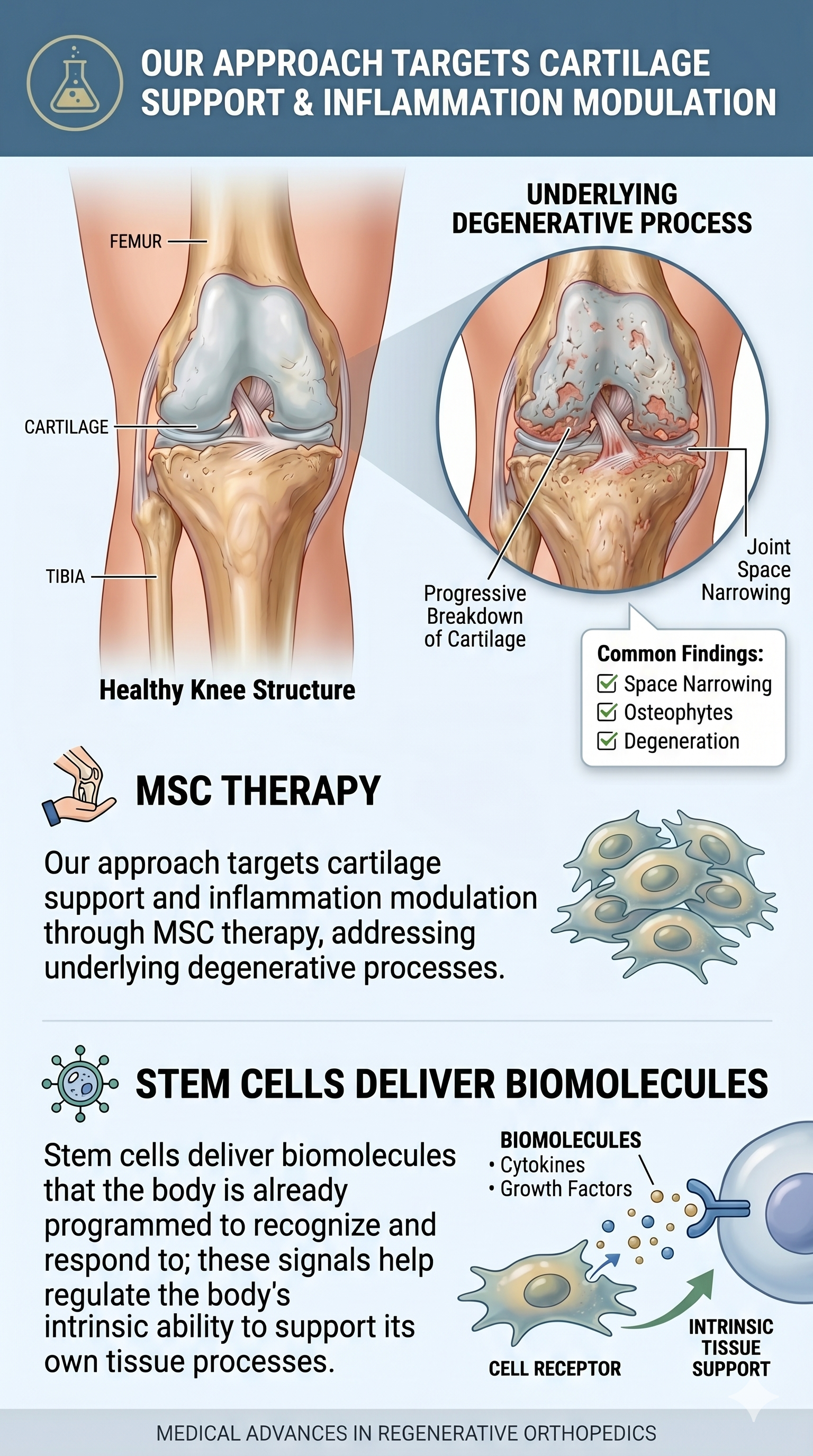
Advanced knee osteoarthritis showing cartilage changes and joint space narrowing – common in knee osteoarthritis

Knee Osteoarthritis

Degenerative Joint Condition

A degenerative condition characterized by the progressive breakdown of cartilage within the knee joint. This leads to pain, stiffness, swelling, and a gradual reduction in mobility and flexibility.

Evidence‑informed
Approach
4-6
Weeks for initial observation
Case reports have noted
pain reduction
Case report: Notable pain reduction (VAS 7/10 → 3/10)

Clinical Approach

Our approach targets cartilage support and inflammation modulation through MSC therapy, addressing underlying degenerative processes. Stem cells deliver biomolecules that the body is already programmed to recognize and respond to; these signals help regulate the body's intrinsic ability to support its own tissue processes. Learn more about this research in The Journal of Orthopaedic Research.

Common Symptoms

Joint Discomfort
Morning Stiffness
Reduced Mobility
Swelling

Our Comprehensive Knee Osteoarthritis Support Approach

Evidence-Based
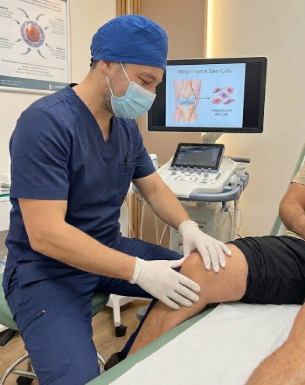
Mesenchymal stem cell injection procedure for knee osteoarthritis support under ultrasound guidance

Mesenchymal Stem Cell Support

Core Regenerative Approach

Our mesenchymal stem cell (MSC) therapy is designed to support knee joint health in patients with cartilage changes or mild-to-moderate osteoarthritis. Learn about our supportive treatment philosophy.

  • Promote a cartilage‑friendly microenvironment: Enables the body's own intrinsic cellular activities
  • Reduce local inflammation: Paracrine signaling
  • Modulate immune response: May influence cartilage stability
  • Recovery period
    Minimal

Clinical Rationale

Disclosure: Dr. Quezada practices at this clinic and has no conflicting financial interests to declare. Our MSC approach introduces growth factors and signaling molecules that work with the body's own regulatory systems. Early research suggests potential influence on cartilage and inflammation, though outcomes vary from person to person. Independent research, including a 2020 systematic review by Park et al. (indexed by NIH), has explored these mechanisms.

Potential Benefits

Cartilage Chondroprotective Influence
Inflammation Modulation
Discomfort Reduction
Improved Mobility
Evidence-Based
Fruits and vegetables for anti-inflammatory nutrition supporting knee osteoarthritis management

Nutrition Support

Essential Support Component

Targeted nutritional support plays a role in knee joint health through anti-inflammatory diet, essential nutrients for tissue maintenance, supplements for joint lubrication, and weight management. Our clinical nutrition plans provide personalized dietary strategies for supportive care integration. Learn more about anti‑inflammatory diet for knee osteoarthritis.

Evidence‑informed
Inflammation support
Immediate
Implementation
Ongoing
Dietary Approach
Helpful
For joint health

Clinical Rationale

Targeted nutritional support provides building blocks for tissue maintenance and reduces systemic inflammation, creating an environment that may complement MSC therapy. The Harvard Medical School provides evidence-based recommendations.

Potential Benefits

Anti-inflammatory Effects
Tissue Support
Joint Lubrication
Weight Management
Evidence-Based
Physical therapist guiding knee rehabilitation exercises for knee osteoarthritis after stem cell support

Physical Rehabilitation

Mobility Support

Structured rehabilitation is important for supporting knee mobility and strength through range of motion exercises, strengthening routines, balance training, and functional activities. View our rehab therapy section or explore specific knee exercises for osteoarthritis.

Notable
Mobility improvement
Weeks to Months
Regular Sessions
Gradual
Progress
Recommended
For maintenance

Clinical Rationale

Structured rehabilitation supports knee mobility and strength, complementing the effects of MSC therapy and helping maintain benefits while supporting joint function.

Potential Benefits

Range of Motion
Muscle Strengthening
Balance Training
Functional Training

Understanding Knee Osteoarthritis

Knee osteoarthritis is a degenerative joint disease that often progresses over time. Our preservation-first approach is supported by evidence-based research. Recent research published in the Sage Journals (view) and the National Library of Medicine (view) has explored stem cell therapy in the context of osteoarthritis.

Clinical Insight:

Our approach combines mesenchymal stem cell therapy with targeted rehabilitation and nutrition to address both structural and inflammatory components of knee osteoarthritis.

Ready to Address Your Knee Osteoarthritis?

If you're experiencing knee pain, swelling, or limited mobility, a comprehensive knee evaluation is a helpful first step toward developing a supportive plan.

Request Virtual Information

Prefer to speak with someone first? Call us at +52 (33) 1840-6037 or explore our orthopedics and sports treatments.

Common Symptoms of Knee Osteoarthritis

Common Symptom
Anterior knee pain localization indicating patellofemoral joint involvement in knee osteoarthritis

Anterior Knee Discomfort

Front of Knee Sensation

Discomfort in the front of the knee may indicate patellofemoral osteoarthritis, where cartilage behind the kneecap shows changes.

Frequent
With OA
Often
Worsens with Use
Addressable
With Support

Associated Condition

Often indicates patellofemoral osteoarthritis. May worsen with stairs, kneeling, or prolonged sitting.

Common Symptom
Medial knee compartment discomfort suggesting medial compartment knee osteoarthritis

Medial Knee Discomfort

Inner Knee Sensation

Discomfort on the inner side of the knee is often related to medial compartment osteoarthritis, a common pattern of knee OA.

Common
With OA
Often
Weight-bearing
Addressable
With Support

Associated Condition

Often related to medial compartment osteoarthritis. Typically worsens with weight-bearing activities like walking or standing.

Common Symptom
Deep intra-articular knee discomfort indicating advanced knee osteoarthritis or cartilage changes

Deep Knee Discomfort

Joint Interior Sensation

Deep, aching sensation within the knee joint may indicate advanced osteoarthritis with significant cartilage changes.

Common
With Advanced OA
Deep
Aching Sensation
Addressable
With Supportive Therapy and Rehabilitation

Associated Condition

Typically indicates knee osteoarthritis, often described as deep ache or grinding sensation.

Unsure About Your Knee Symptoms?

Our regenerative medicine specialists can help identify the cause of your knee concerns and discuss appropriate support options. Don't let knee discomfort limit your daily activities.

For immediate concerns, call +52 (33) 1840-6037.

Compare Knee Osteoarthritis Support Options

Approach Features
MSC Support
Nutrition
Physical Rehabilitation
Primary Goal
Joint support & cartilage health
Reduce inflammation & support tissue health
Restore mobility & strength
Duration
Single procedure with lasting influence
Ongoing dietary approach
Weeks to months of regular sessions
Recovery Period
Minimal downtime
Immediate implementation
Gradual improvement over time
Best For
Moderate to advanced changes
Inflammation reduction, tissue support
Mobility restoration, muscle strengthening
MSC Support

Joint support & cartilage health

Nutrition

Reduce inflammation & support healing

Physical Rehabilitation

Restore mobility & strength

MSC Support

Single procedure with lasting influence

Nutrition

Ongoing dietary approach

Physical Rehabilitation

Weeks to months of regular sessions

MSC Support

Minimal downtime

Nutrition

Immediate implementation

Physical Rehabilitation

Gradual improvement over time

MSC Support

Moderate to advanced changes

Nutrition

Inflammation reduction, tissue support

Physical Rehabilitation

Mobility restoration, muscle strengthening

Our specialists recommend personalized combinations of these approaches for an integral strategy. View research from the National Institutes of Health.

Request Protocol Information

Frequently Asked Questions About Knee Osteoarthritis Support

Mesenchymal stem cell therapy addresses knee osteoarthritis by targeting underlying joint processes. The stem cells have anti-inflammatory properties that may reduce joint inflammation, and they release growth factors that influence the body's natural regulatory systems. (Informational only – consult your physician. Individual results vary.) Learn more about our supportive treatment philosophy or view research from the National Institutes of Health.

Clinical studies and patient outcomes indicate that many individuals experience meaningful improvement in knee discomfort and function following MSC therapy. Response rates vary based on factors like the severity of the condition, patient age, and adherence to post-treatment protocols. Many patients report notable improvement in discomfort levels and functional mobility within 3-6 months after treatment. (Informational only.)

Most patients begin to notice changes within 4-6 weeks after MSC therapy, with continued progress over 3-6 months as supportive processes continue. The nutrition and rehabilitation components can provide more immediate benefits in terms of reduced inflammation and improved mobility. Maximum benefits are often observed by 6 months. (Informational only.)

The MSC injection procedure is performed with local anesthesia to minimize discomfort. Most patients describe the sensation as mild pressure rather than pain. After the procedure, some temporary soreness or swelling may occur for a few days, which can be managed with over-the-counter pain relievers. (Informational only.)

Nutrition plays a role in knee joint health by providing building blocks for tissue maintenance and reducing systemic inflammation. An anti-inflammatory diet rich in omega-3 fatty acids, antioxidants, and collagen-supporting nutrients can help create an environment that supports joint function. (Informational only.) Learn from the Harvard Medical School.

Stem cell therapy for orthopedic conditions is performed as a same-day procedure using donor Wharton's Jelly MSCs under licensed physician supervision. Our partner laboratories operate under the regulatory oversight of COFEPRIS. This therapy is not FDA‑approved and is considered investigational in the United States. (Informational only.)

Stem cell therapy offers a minimally invasive alternative to knee replacement surgery. While knee replacement involves removing damaged joint surfaces and replacing them with artificial components, stem cell therapy aims to support natural tissue processes. Recovery time is typically shorter with stem cell therapy (weeks vs months), and there is no risk of implant rejection or loosening. However, it is most often considered for mild to moderate osteoarthritis. (Informational only.)

Because every treatment plan is tailored to the individual, the investment varies based on the specific protocol, number of sessions, and any additional supportive therapies. Most insurance plans do not cover this types of therapy. To receive accurate, personalized information about the investment required for your unique situation, please contact our patient coordinators directly. We are happy to provide a detailed, obligation‑free discussion of your options. (Informational only.)

Possible side effects include temporary pain or swelling at the injection site, minor bleeding, or infection risk (less than 1%). Since we use screened donor cells, there is no risk of rejection. Serious complications are rare. Not all patients respond to therapy. (Informational only.)

Many patients experience reduced discomfort and improved function for an extended period after a single treatment. Some may consider a maintenance session every few years. Longevity depends on factors such as arthritis severity, age, activity level, and adherence to post‑treatment recommendations. (Informational only.)

Common Questions People Ask About Knee Osteoarthritis

What helps knee osteoarthritis discomfort?

For knee osteoarthritis discomfort, a combination of mesenchymal stem cell therapy (to provide support to cartilage), anti-inflammatory nutrition (to reduce swelling), and targeted physical therapy (to strengthen supporting muscles) is often considered. Many patients find significant relief with this comprehensive approach. View research from the Arthritis Foundation and the National Library of Medicine.

Can stem cells support knee cartilage health?

Research suggests mesenchymal stem cells exhibit chondroprotective properties that may help support cartilage health in the knee. These cells release growth factors that influence the joint environment and may promote tissue support processes, potentially improving joint function. View our Wharton's Jelly mesenchymal stem cells research or read studies from The National Library of Medicine.

What is a comprehensive non-surgical approach for knee arthritis?

A comprehensive non-surgical approach often combines mesenchymal stem cell therapy with supportive nutrition and physical rehabilitation. This approach aims to address inflammation, support joint tissue, and restore mobility without surgery. Explore our non-surgical options or take a look at our preventative and maintenance protocols.

Still Have Questions About Knee Osteoarthritis Support?

Our specialists are available to answer your specific questions and provide personalized information based on your unique condition and goals.

For quick answers, call +52 (33) 1840-6037 or explore our complete knee conditions resource hub for detailed information.

Need Expert Evaluation for Your Knee Osteoarthritis?

Our Regenerative Medicine Specialists can help determine the best approach for your specific knee concerns. Request a comprehensive evaluation to receive personalized support recommendations.

Prefer to speak with someone first? Call our regenerative medicine specialists at +52 (33) 1840-6037 or explore our patient guide.

Contact Our Knee Osteoarthritis Specialists

Connect With Our Team

What is Knee Osteoarthritis?

Knee osteoarthritis is a degenerative joint disease characterized by the breakdown of cartilage in the knee, leading to pain, stiffness, swelling, and reduced mobility. It's the most common form of arthritis affecting millions of people worldwide. Learn more from the Centers for Disease Control and Prevention or explore our comprehensive patient guide.

Typical Support Timeline for Knee Osteoarthritis

  • Week 1-2: Initial inquiry & diagnostic imaging
  • Week 3: Stem cell therapy procedure
  • Week 4-8: Initial recovery & rehabilitation
  • Month 3-6: Continued progress & follow-up

View our detailed support timeline or read patient journeys.

Our regenerative medicine specialists understand the daily challenges of knee osteoarthritis and are available to discuss your specific mobility concerns and potential support options for improved quality of life. Meet our specialists or learn about our clinical expertise and informational research.

Quick Contact Options:

For immediate assistance, call +52 (33) 1840-6037 or explore our knee conditions resource hub.

Send Us a Message or Request Information to speak to one of our knee osteoarthritis specialists

Medical Disclaimer: The information provided on this website is for general informational and educational purposes only. It is not intended as a substitute for professional medical advice, diagnosis, or treatment. Individual results may vary.

By submitting this form, you agree to our Privacy Policy and consent to be contacted by our team. Download our free knee guide while you wait for our response.

Live Chat Contact Us